

Goosto Case
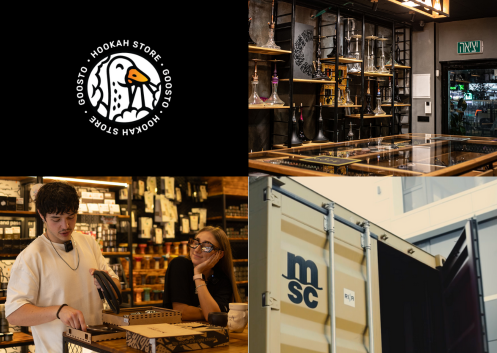
Goosto case : how we built a scalable import and logistics model with dozens of suppliers
Introduction
Goosto is our main and operating business, on the basis of which the G-Unit model was built and refined. This is where we gained key practical experience in international trade, import, logistics and regulation.
About every month and a half, Goosto imports a full container of hookah products to Israel: tobacco, tea mixes, accessories and related products. They participate in the supply chain more than 20 suppliers in Russia, each with its own specifics, packaging, documents and production processes.
This case is about how we created a complex, fragmented system manageable, cost-effective and scalable model.
Context and challenges
Importing smoking products into Israel is one of the most strictly regulated categories.
Each product must meet the requirements for:
- labelling
- package size and format
- colors and Pantone
- language and content of the text
- identification of the party and origin
Any error at the production or packaging stage may result in a delay, additional checks or a refusal to import.
At an early stage, Goosto worked directly with each supplier. This meant:
- separate export declarations from each supplier
- separate invoices
- separate import processing
- complex financial model with multiple payments
- high operational and regulatory risk
With the increase in volumes, it became obvious: this model is not scalable.
The solution: a single operating circuit
The key turning point was the creation of unified operating model.
1. Consolidation within the country of origin
It was organized in Novorossiysk consolidation warehouse, where goods from all suppliers are shipped.
At this point, we will:
- we accept and inspect goods
- we form pallets
- we label each pallet for easy identification
- we prepare goods for export as a single stream
This made it possible to turn dozens of disparate supplies into one managed export shipment.
2. Labeling and packaging management
As part of Goosto, we have taken control not only of logistics, but also packaging circuit:
- preparation of marking layouts
- Pantone and size control
- working with cardboard production
- interaction with printing houses
- checking the correct packaging with suppliers
In fact, we built single packaging and labeling standard, mandatory for all producers.
3. Single exporter = multiple reduction in complexity
The key change is the transition to a model where one legal entity:
- purchases products from suppliers
- acts as an exporter
- generates a single set of documents
- provides a single standard for invoices and packlists
This has led to:
- reducing the number of export declarations
- simplifying import processing
- reducing the number of errors and requests
- significant savings in time and money
Financial effect
In practice, we saw that savings become a multiple, when:
- there are 2 or more suppliers in one country
- single agent/exporter is used
- financial flows are centralized
Payment via one company:
- simplifies calculations
- reduces bank costs
- allows you to flexibly distribute payments between suppliers and logistics
- increases transparency and control
The evolution of the process
It's important to note: this model wasn't perfect from the first container.
With every import we will:
- improved control
- optimized processes
- reduced the number of manual operations
- standardized documentation
Today this system works as streamlined mechanism, which can be scaled up and transferred to other businesses and categories.
Conclusion
The Goosto case has become a practical basis for G-Unit.
We have proved on our own business that:
- complex supply chains can be simplified
- regulation is a controlled process
- consolidation and a single exporter provide real savings
- an entrepreneurial approach to logistics solves more than the classic contractor scheme
That is why G-Unit is now offering this model to other companies — not as a theory, but as a tried-and-tested solution.